Our Courses
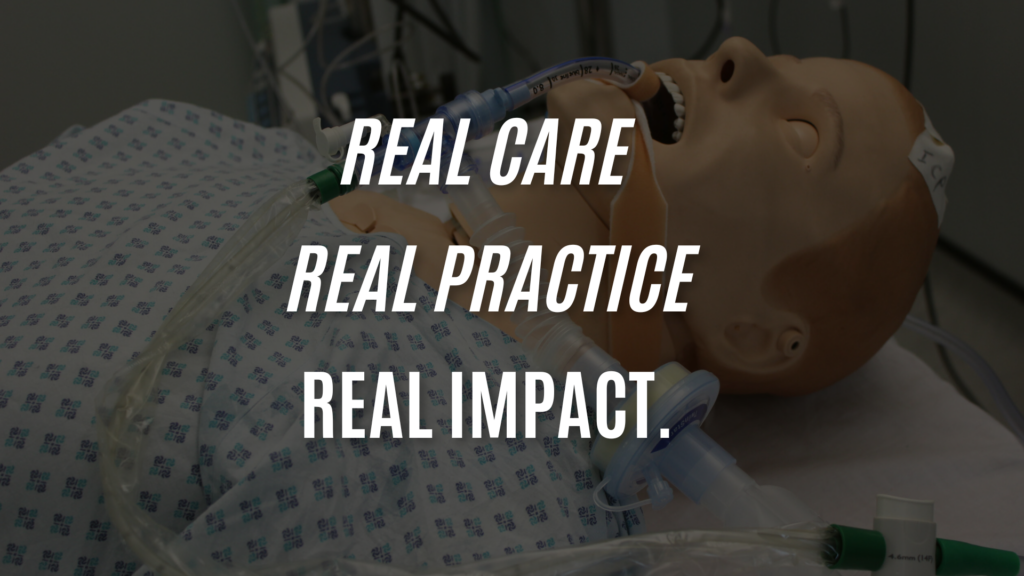
At HILS, we bring clinical training to life through realistic simulation.
From in-house courses designed by our clinicians to nationally recognised Royal College programmes, we support learners at every stage.
Using high-fidelity manikins, virtual reality, and immersive scenarios, you can practise safely, build confidence, and refine your skills.
Our goal is simple – to help you feel confident, capable, and ready to deliver the best possible care.
Royal College Courses
HILS is proud to deliver accredited training courses on behalf of several Royal Colleges, including the Royal College of Surgeons, Royal College of Physicians, Royal College of Ophthalmologists, and the Royal College of Obstetricians and Gynaecologists.
All of our courses can be booked through our bookings page, or by emailing our friendly course administrators listed at the bottom of each course.
ATLS - Royal College of Surgeons
ATLS is a multi-disciplinary course enabling standardised language of trauma care across the specialities. Attendance of the course also exposes the candidate to a network of motivated colleagues with an enthusiasm for trauma management.
This 2-day course is highly interactive, combining lectures, discussions, interactive tutorials, skills teaching, and simulated patient management scenarios (moulage). Aimed at F2 and above.
HILS is pleased to deliver this course in Hull, Grimsby, and Scunthorpe. To apply to the course, please email course administrator Jane Backhouse (jane.backhouse@nhs.net)
ATLS Reverification - Royal College of Surgeons
The ATLS committee recommends that individuals at the student-course level participate in a reverification course or retake the entire ATLS course every 4 years.
Individuals are encouraged to re-verify by the time their status expires. A 6-month grace period is allowed to facilitate the reverification process. Individuals who successfully completed a student course 4 years prior are eligible to participate in the reverification course, provided their status expiration dates are within the above allotted time frame.
To apply for this course, please email jane.backhouse@nhs.net
AtNC (Advanced Trauma Nursing Course) - Royal College of Surgeons
Aimed at all registered nurses, the course aims to provide the skills and knowledge necessary to care for the trauma patient.
The nursing component focuses on the nursing responsibilities essential to acute trauma management.
To book on to this course, please email jane.backhouse@nhs.net
Basic Practical Skills - Royal College of Obstetricians and Gynaecologists
Intended for trainees ST1-2 and is a mandatory requirement for entry into ST3.
The RCOG BPS course is designed to introduce trainees to safe surgical techniques and obstetric clinical skills in a structured workshop environment. The course is standardised to ensure common objectives, content structure, and assessment methods are followed and can be linked to the RCOG Training Portfolio and OSATS.
This two-day format enables trainees to focus on hands-on skills whilst in the classroom by introducing pre-course eLearning materials including videos and assessments. The course also looks at the increasingly important topic of human factors and enhanced recovery principles, complimenting the new RCOG curriculum.
To book on to this course, please view our available dates on our bookings page.
CCRISP (Care of the Critically Ill Surgical Patient) - Royal College of Surgeons
Aimed at core trainees and above, this course focuses on the ability to assess critically ill patients accurately and appreciate the value of a system assessment of the critically ill. Additionally, it focuses on understanding the importance of having an action plan in order to achieve clinical progress, accurate diagnosis, and early definitive treatment.
To book your place on the course, email jane.backhouse@nhs.net
IMPACT (Ill medical patients' Acute Care and Treatment) - Royal College of Physicians and Surgeons of Glasgow
Aimed at F2 and above, this two-day course introducing the principles and practices and acute medical care and related knowledge, skills, understanding, and attitudes. It is intended to improve patient safety by enhancing the skills of doctors managing acute medical admissions.
All major acute presentations mapping to the UK core medical curriculum are incorporated into this learning.
MEPA (Managing Emergencies in Paediatric Anaesthesia) - Royal College of Anaesthetists
This course aims to give the opportunity to develop management strategies for emergencies in paediatrics anaesthesia using high-fidelity simulation.
MRCS - Membership of the Royal College of Surgeons Part B
This 2-day course covers the exam format, tips and suggestions with group revision and syllabus. Group scenarios are included too.
On day 2, delegates will partake in an exam simulation, OSCE.
To apply for this course, please email jane.backhouse@nhs.net
HILS Facilitated Courses
All HILS courses can be booked via our bookings page.
ASCME (Acute Simulated Core Medical Emergencies)
ASCME is aimed at giving IMT1 experience in management of acute medical emergencies and human factors.
BOASTY (Basic Obstetric Anaesthesia Simulation Training of Yorkshire)
CT2 trainees in anaesthesia will undergo a hands-on simulation in obstetric anaesthesia ensuring comprehensive practice, detailed discussions, and structured feedback.
Core Airway Teaching Course
This course includes difficult airways, front of neck access, human factors, and airway simulation scenarios.
Core Trainee Airway Simulation Course
Aimed at all anaesthetic and ACCS core trainees.
This course will help you gain confidence in assessing difficult airways, planning anaesthesia for difficult airways, managing “can’t intubate, can’t oxygenate” situations and applying human factors principles in theatre.
CRISIS (Critical Situations in Emergency Medicine)
A one-day course focusing on the rare ultra-high acuity situations encountered in Emergency Medicine.
Critical Incident Course
Aimed at all core trainees in anaesthesia and all ACCS. Delegates will undertake scenarios to equip them with skills to manage critical incidents effectively.
Difficult Airway Course
This course aims to give the opportunity to develop management strategies for emergencies in paediatrics anaesthesia using high-fidelity simulation manikins.
Essence of Debriefing Course
For healthcare professionals who want to lead effective, meaningful debriefs.
This interactive and practical course explores the why, what, and how of debriefing in healthcare, particularly within simulation or high-pressure clinical environments. The course will teach you the importance of debriefing, different styles of debriefing, the 3D model, and how to handle tricky situations such as silent learners, dominant talkers, upset colleagues, and clashing hierarchy dynamics.
ETC (European Trauma Course) - Eurpoean Trauma Course Organisation (ETCO)
This course covers all aspects of major trauma. You will experience a full range of major trauma scenarios ranging from blunt trauma to stabbing, trauma in pregnancy, blasts, burns, traumatic amputations, and much more.
HECTOR (The Heartlands' Elderly Care Trauma & Ongoing Recovery Programme)
Developed in response to the rising trend of trauma sustained by the elderly patient.
HIT (Hull Interdisciplinary Tracheostomy Course)
Designed for healthcare professionals caring for patients with tracheostomies and laryngectomy stomas, focusing on hands-on exercises, simulations and teamwork.
It includes a hands-on approach to workshops and simulation, support from critical care, outreach, physiotherapists, speech and language therapists and medical staff. Emphasis on training in teams with a supportive approach.
HMIMMS (Hospital, Major Incident, Medical Management and Support) - Advanced Life Support Group (ALSG)
For hospital staff responsible for planning, training, and managing aspects of a major incident from a hospital perspective.
Human Factors Course
A new human factors course for all healthcare professionals of all roles and grades.
PEM (Paediatric Emgergency Medicine)
This course aims to give the opportunity to develop management strategies for emergencies in paediatrics anaesthesia using high-fidelity simulation.
SPECS (Simulated Paediatric Emergency Care Scenarios)
Multi-disciplinary, multi-professional course aimed at healthcare personnel who respond to emergency bleeps.
TOAASTY (The Obstetric Anaesthesia Advanced Simulation Training of Yorkshire)
This course focuses on the continued professional development needs of consultant anaesthetists in managing obstetric emergencies.
Train the Trainers in Simulation
This is an intensive multi-professional one day introduction to high-fidelity simulation.
It is designed to help educators use simulation as an effective educational tool. The course will provide participants with the skills to design simulation exercises and use debriefing techniques, to provide feedback, enhancing learning in a safe environment.
5 CPD points have been approved by the Royal College of Anaesthetists for attending this course.
Transfer Course
Focusing on deciding when to transfer a patient, impact of transfer on patient, awareness of transfer hazards, preparing a patient for transfer, conducting inter-hospital transfer and dealing with problems en route.
YIPS (Yorkshire Immersive Paediatric Simulation)
Aimed at ST3 paediatric trainees. Each delegate has the opportunity to learn by being placed in realistic scenarios with no risk to real patients.